
The Knowledge Hub

Exploring the technology, trends, and human stories shaping the future of connectivity in Latin America.

Featured Article

Latest Articles

Image
Disaster recovery plan: how to build it for mid-size and large

Disaster recovery plan: how to build it for mid-size and large

A disaster recovery plan is the set of processes, objectives and responsibilities that allow an organisation to restore its critical systems after a disruption, whether caused by a cyberattack, an infrastructure failure, human err...

Image
Business internet: which features matter when choosing a provider

Business internet: which features matter when choosing a provider

Contracting business internet is not simply a matter of comparing speeds and prices. For an organisation running critical applications in the cloud, serving customers in real time or connecting several sites, the internet connection is business in...

Image
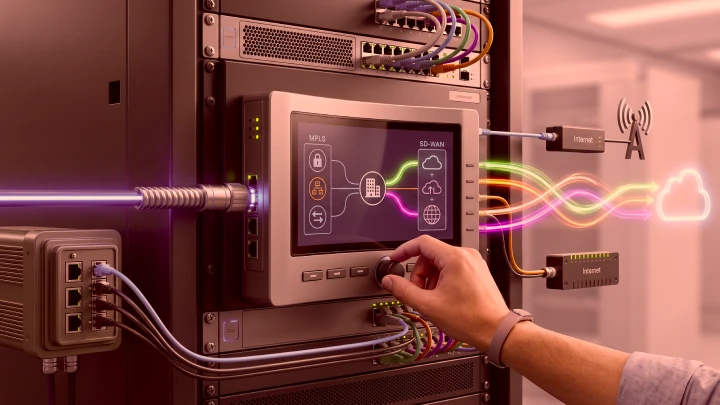
MPLS vs SD-WAN: which to choose for your corporate network

MPLS vs SD-WAN: which to choose for your corporate network

As companies move more applications to the cloud and add sites, the question of how to connect the whole operation becomes strategic. Two technologies dominate the conversation: MPLS, the reliable standard of the last two decades,...

Image
Colocation: what it is and when it beats pure cloud

Colocation: what it is and when it beats pure cloud

Deciding where to host IT infrastructure is rarely black and white. Between building your own data centre and moving everything to the public cloud sits a middle ground that many companies end up choosing: colocation. Understanding what it is and ...

Image
Network Latency: What It Is and How to Measure It in Critical Operations

Network Latency: What It Is and How to Measure It in Critical Operations

A network can have all the bandwidth in the world and still feel slow. The reason is usually latency: the time it takes for data to travel from one point to another. In operations where every millisecond counts (financial transactions, industrial ...

Image
Tier III vs. Tier IV Data Center: Practical Differences for Businesses

Tier III vs. Tier IV Data Center: Practical Differences for Businesses

When evaluating a data center, sooner or later the question comes up: Tier III or Tier IV? Both are high-availability levels certified by the Uptime Institute, and both support serious operations. The difference between them is subtler than the ju...

Image
Nearshoring and the Demand for Connectivity

Nearshoring and the Demand for Connectivity: What's Coming for 2026

Nearshoring, the relocation of operations to countries close to major consumer markets, has stopped being an emerging trend and become a force reshaping Latin America's production map. And behind every plant that sets up, every service center that...

Image
Submarine Cables: How They Connect Latin America to the World

Submarine Cables: How They Connect Latin America to the World

When people picture the internet, the image that usually comes to mind is wireless: satellites, antennas, Wi-Fi. The reality is far more physical. Roughly 99% of international data traffic travels through fiber-optic cables laid on the seabed. Eve...

Image
IT Operational Continuity: A Practical Framework for Directors

IT Operational Continuity: A Practical Framework for Directors

No infrastructure is immune to failure. The question that should drive IT management isn't whether an outage will happen, but how long the operation will take to recover and how much data will be lost in the process. Operational continuity...

Business Class: The Playbook

  • Series
    Image
    Why Liberty Networks

    Why Liberty Networks

    Discover the infrastructure, scale and expertise behind one of the region’s leading connectivity providers.

  • Series
    Image
    Subsea Networks 101

    Subsea Networks 101

    Learn everything you need to know from our experts to gain a more accurate understanding of how our submarine cables work.